How much does stamped concrete cost per square foot?
Typical U.S. prices run about $12 to $25 per square foot for patios, though pattern, color, and site access change the total. Always get a written quote that lists each item.
Request your written estimate today
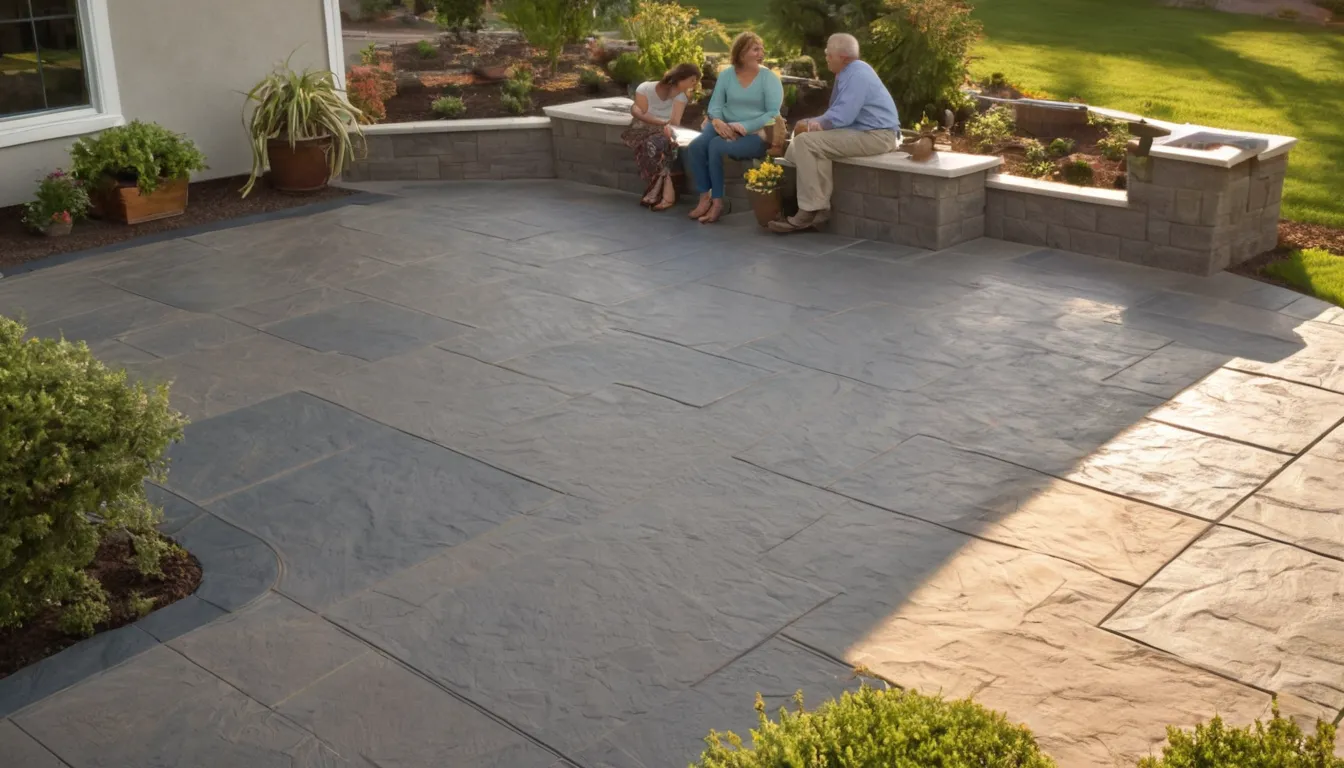
Stamped concrete is regular concrete with color and a pattern pressed into the top while it is still soft. The result can look like slate, brick, or wood, but it stays one solid slab. It suits patios, walkways, pool decks, and driveways.
Hightes Concrete is a referral service. We do not pour or stamp anything ourselves. We connect homeowners in American Canyon, CA and the American Canyon area with independent local providers who do. Before you talk to anyone, take photos and write notes. Then ask for a quote in writing. A little paperwork up front helps you compare offers and avoid costly mistakes.
Do take photos of the space first. Capture the ground, the edges, nearby walls, and any cracks in old concrete. Do not skip this step. Dated photos help providers quote more accurately. They also give you a record if a question comes up later.
It starts as a normal concrete pour. Color is added to the mix or sprinkled on top. Then workers press mats or tools into the surface while it is still workable. This leaves a texture that copies stone, brick, tile, or wood.
A sealer goes on at the end. It protects the color and makes the surface easier to clean.
A pretty pattern cannot fix a weak base. Soil must be compacted and, in most cases, covered with gravel. Ask each provider how they prepare the ground. Do not accept a vague answer. Many homes here sit on slabs or raised foundations, so ask how the new surface will meet the house and shed water away from it.
Winter rain events can bring heavy water in a short time. A gentle slope away from the house helps. Ask the provider to explain the planned slope in your written quote.
Common choices include:
Colors range from soft gray to warm tan to deep brown. Stucco ranch homes often pair well with earthy tones. Ask to see sample boards in daylight before you decide.
Homeowners often choose it for backyard patios, front walks, pool surrounds, and entry areas. Many local homes were built between the 1950s and 1980s. A bare slab out back can feel plain. A stamped surface can lift it without changing the whole yard.
If you want a stamped driveway, ask the provider about thickness and reinforcement. Driveways carry heavy loads.
Both look good. They behave differently.
A slab can crack over time, as all concrete can. Control joints help guide where it happens. Pavers can shift if the base settles. Ask a provider which fits your soil and your budget.
Busy households need a clear schedule. Ask these questions before work begins:
Do not walk on a fresh slab. Even a small footprint can stay forever.
Most projects have several stages: prep, forms, pour, stamping, curing, and sealing. Small patios may take a few days of work. Larger jobs take longer. Weather can shift the plan. Dry seasons help, but wildfire smoke and winter rain can both cause delays. Ask for a rough timeline in writing.
Concrete needs time to gain strength. Ask when you can walk on it, place furniture, and drive on it. Follow those dates exactly.
Do not use rock salt or sharp metal shovels. They can scar the surface.
Look for providers who show past stamped work and explain each step in plain words. Ask about permits, insurance, and who handles cleanup. Verify any license claim yourself with your state.
If you are also dealing with a damaged slab, such as a concrete driveway repair or foundation repair experts, treat that as a separate job. Get those items quoted on their own.
Save your photos, notes, quote, and receipts in one folder. Some policies may cover sudden damage, so check your policy. Providers can often help document damage for a claim.
Stamped work is a form of concrete flatwork. It has many parts that affect price. A good quote lists size, thickness, pattern, color, sealer, and removal of old material. Do not sign anything that leaves these blank.
Quote in writing, then compare at least two or three offers side by side.
Slate, brick, wood, or cobblestone looks pressed into the surface while the concrete is fresh.
Integral color, surface tint, and a protective sealer help the surface hold its look.
Soil prep, gravel, forms, and a gentle slope help water move away from your home.
Providers typically clear debris, apply sealer, and explain how long to wait before use.
These are typical U.S. ranges only. Prices vary by size, pattern, access, and local rates. Ask each provider for a written quote that lists every item so you can compare fairly.
| Item | Typical range | Notes |
|---|---|---|
| Stamped patio, per sq ft | $12 – $25 | Pattern and color change the price |
| Stamped walkway, per sq ft | $10 – $22 | Narrow paths can cost more per foot |
| Stamped driveway, per sq ft | $14 – $28 | Needs thicker slab and strong base |
| Sealer and resealing | $1 – $3 per sq ft | Often repeated every few years |
| Old concrete removal | $2 – $6 per sq ft | Depends on thickness and hauling |
| Added color or borders | $1 – $4 per sq ft | Custom designs raise the total |
Take dated photos of the space, then jot down size, slope, and what you hope to achieve.
Use the form or Request a callback to check provider availability and share your project details.
Look at scope, materials, timeline, and cleanup side by side before choosing a provider.
Agree on dates, access, and curing rules so daily life stays as smooth as possible.
We encourage photos, notes, and written quotes before you commit to any project.
Independent providers in our network work in your area.
Request an estimate with no obligation and compare your options calmly.
Hightes Concrete refers you. Providers do the work and set their own terms.
Typical U.S. prices run about $12 to $25 per square foot for patios, though pattern, color, and site access change the total. Always get a written quote that lists each item.
With a solid base, good drainage, and regular sealing, stamped concrete can last for many years. Like all concrete, it may crack over time, so ask providers how they place control joints and what upkeep to expect.
Sometimes. A provider may add a thin overlay and stamp it, but the old slab must be sound. Cracks, heaving, or poor drainage usually mean replacing it instead. Ask for a site visit.
Tell us about your driveway or patio plan. Request an estimate, and a local provider in our network can follow up with next steps.
No obligation